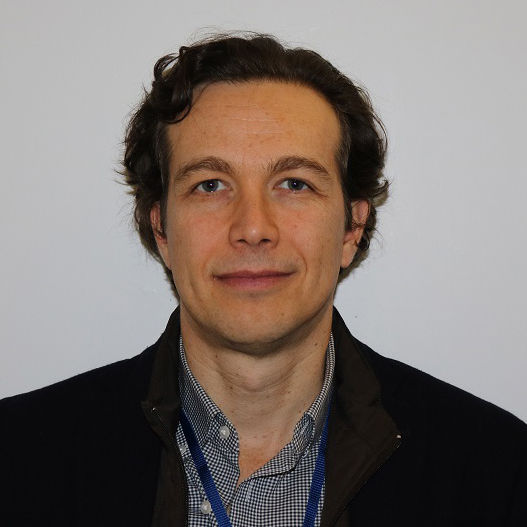
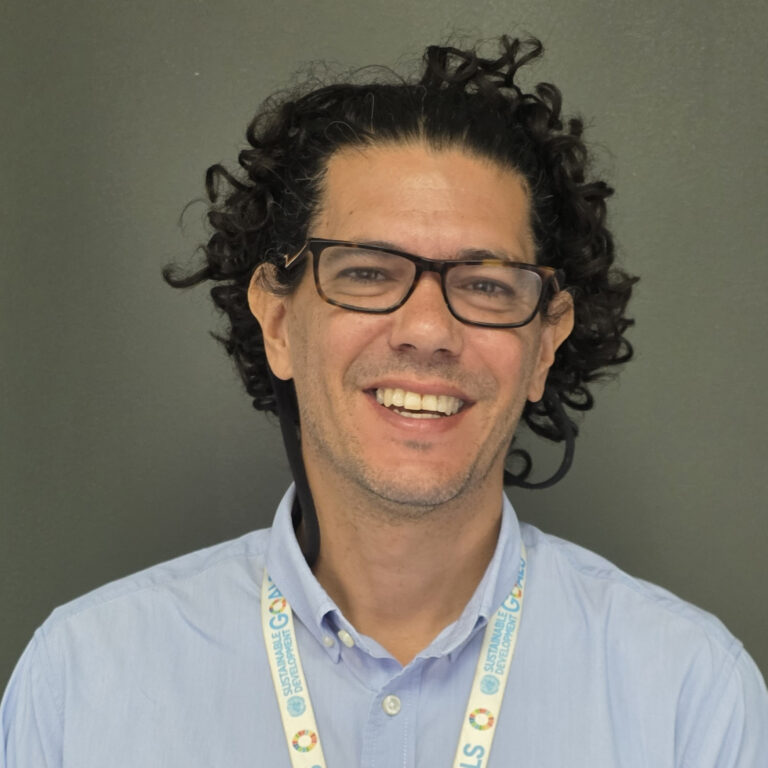
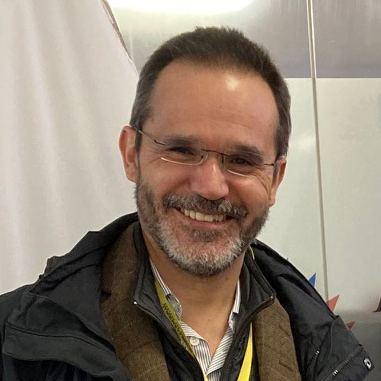
In conversation with the Dag Hammarskjöld Foundation, UN Peace and Development Advisors Diego Antoni in Guatemala, Dylan Kerrigan in Trinidad and Tobago, and Salvador Aguilera in Ecuador reflected on conflict prevention, sustaining peace and the UN’s role across Latin America and the Caribbean. They spoke of conflict and military rule legacies, rising organised crime and securitised responses, and the need for more integrated, flexible, and politically grounded approaches to peacebuilding. From non-recurrence mantras to institutional reforms, their insights chart both progress made and challenges ahead.
“Bringing the historical perspective into everything we do”
The region carries the weight of internal armed conflicts and military regimes – history that continues to shape how governments, communities, and the UN approach the work of sustaining peace. “Latin America has historically been shaped by the experience of internal armed conflict and the military regimes of the second half of the 20th century,” said Diego Antoni, Peace and Development Advisor (PDA) in Guatemala. “There is a deep awareness of the costs of conflict recurrence. That is particularly true in Guatemala, where an internal armed conflict took place from the 60s until the 90s.”
For Antoni, this historical consciousness remains central to how conflict prevention is understood in the region. “It is very important to always connect with this deeper sense of – we need to prevent this from happening again. I have seen the UN consistently accompany this emphasis of non-recurrence in Latin America.” This awareness, he added, is increasingly being translated into anticipatory approaches. “In every peacebuilding intervention in Guatemala, we consistently refer back to the internal conflict of the past and how it created deep structural mistrust between the involved parties. Prevention means bringing the historical perspective into everything we do.”
Conflict prevention in a shifting security context
While historical memory remains central, prevention debates are increasingly shaped by contemporary insecurity and organised crime. Antoni noted that some governments and communities now see hardline security approaches as a form of prevention in themselves, creating new challenges for the UN’s human rights-based approach. “The crux of the discussion is how to continue presenting the human rights framework as the cornerstone of prevention when constituencies are not convinced that it is delivering for them.” In some communities affected by organised crime, he added, criminal groups are perceived as filling gaps left by the state by providing services and forms of local order.
Salvador Aguilera has observed similar dynamics in Ecuador, particularly in the growing influence of organised crime. “The prevention approach has become more closely linked to human rights,” he said. “Peace, development, and human rights have always been important, but they are now even more so.”
He stressed that civil society must remain central. “In the region, civil society is increasingly stigmatized, and civic space is shrinking, so our relationship with civil society has to be more protective.” He added that the UN’s role is to connect different levels of action. “We play a key role in linking civil society at the national and community levels. The UN’s ability to connect global, regional, national, and local efforts is fundamental.”
Aguilera also reflected on the increasingly complex dilemmas created by organised crime. In some areas, he said, criminal groups are taking on functions traditionally associated with the state, raising difficult questions about mediation, dialogue, and the UN’s best possible role in such contexts. He noted that institutions such as the Catholic Church have sometimes retained access and legitimacy in territories where state presence is limited, positioning it as a key partner in these contexts.
Violence without war
In the Caribbean, the security context has evolved differently. “Sometimes you have to remind people that the Caribbean is not just a destination of sun, tourism, and good times,” said Dylan Kerrigan, PDA in The Caribbean. “Since the late 1990s, we’ve seen a high-violence society at the community level. We don’t have wars here, but we have community-level gangs.”
Kerrigan said the response had long been reactive. “What we saw was a real reaction from security services, very much about policing. Prevention wasn’t really part of the big discourse; it was hidden by security systems.”
Over time, he explained, the UN has helped shift the narrative. “There is now greater recognition that prevention must go hand in hand with security, but implementation remains the challenge.”
Kerrigan argued that fear and insecurity often reinforce demands for more securitized responses. In societies affected by high levels of violence, he explained, people naturally gravitate toward strong enforcement–based approaches because they feel unsafe in their daily lives. While the UN has increasingly promoted “social prevention” approaches focused on youth, education, and livelihoods, Kerrigan stressed that a more systemic understanding of prevention is still needed – one that connects community resilience, public health approaches, long-term social policy, and security interventions.
UN reforms and their impact on prevention
The repositioning of the UN development system, particularly the Resident Coordinator reform, has reshaped how prevention is coordinated and delivered across the region. Kerrigan remarked that the Resident Coordinator reform had helped him work across a broader regional landscape. In providing support to five different RCs across the region, he can share his messages on prevention across several UNCTs and create a regional picture of risk “Rather than my message getting lost in one UNCT, I can now deliver it regionally. This improves coordination across agencies, regions, and UNCTs.”
Kerrigan pointed to challenges from funding silos and agency mandates that don’t fit the Caribbean context which requires him to spend more time linking different agencies together to engage in discussions on regional prevention that recognise national divergences in how prevention is understood, lands and gains traction
Antoni explained there is now broad agreement that the reform is moving in the right direction but identified two major challenges. “The first is to keep a whole-of-society approach whenworking with many different components, responding to a wide variety of requests, and navigating shifting donor priorities. The second is backlash against human rights norms. That’s a reality. The RC system needs to preserve the integrity of an agenda anchored in human rights while grounding it in different country contexts.”
Aguilera, who had served as PDA in the region before the reform, said the changes had strengthened the political and strategic role of the position. “We have dual functions and are part of the Resident Coordinator offices, the United Nations Development Programme (UNDP), and the United Nations Department of Political and Peacebuilding Affairs (DPPA). This link between political analysis and programmatic engagement is key for us.”
He pointed to the value of mainstreaming prevention across planning processes. “Mainstreaming a prevention lens – for example in the UN Common Country Analysis, Cooperation Framework, or integrated inter-agency risk analysis – is something that’s now different.”
Making prevention and sustaining peace more effective
Despite progress, some gaps remain in how prevention is financed, scaled, and embedded institutionally. Aguilera noted that the peacebuilding architecture has helped translate policy into practice. “The Peacebuilding Architecture Review (PBAR) has facilitated the transition from policy commitment to field-level impact and reinforced UN system coherence through inter-agency programming,” he said. “It has also enabled a regional approach.”
He highlighted the Peacebuilding Fund (PBF)’s value in fragile contexts. “It is flexible and designed to take risks,” he said. “It’s easier to identify and formulate projects in difficult contexts when you know the PBF welcomes these kinds of proposals.” For him, the Fund has made joint responses possible. “Without the PBF, in contexts like Ecuador, we couldn’t have mounted a common response to emerging risks.”
Antoni agreed and emphasized evidence and scale. “The PBF needs to be a risk-taker. You need evidence of what works and what doesn’t. That’s why taking risks is so important, because whenever one component fails, that data is valuable.” He also stressed the important link between the PBF and Peacebuilding Commission (PBC). “The PBC contributes to bridging the gap between political intentions, analysis, and ground realities,” he said “It provides evidence to discuss why prevention functions like insurance – it’s cheaper than paying for the harm once it’s done.”
Kerrigan noted that Caribbean perspectives and the realities of SIDS are not always sufficiently reflected within international peacebuilding discussions and mechanisms, limiting broader understanding of the region’s challenges. “If you have a prevention architecture, and it has a policy and then a budget line, you are in a different space. That is what I have been trying to do here in the Caribbean with the RCs.”
Partnerships and political engagement
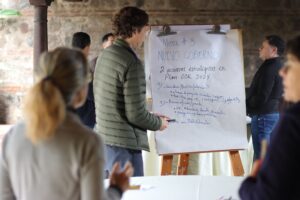
Partnerships have become increasingly central to how prevention is pursued across the region. Antoni stated the UN’s role as an honest broker remains central, but the set of partners has expanded in recent years. “A year or two ago, I would have said the UN’s honest broker role was mainly about bringing national partners together, working with civil society and government,” he said. “Now we’re investing more in coordinating with embassies, particularly from donor countries, to stay aligned with national prevention priorities.” Antoni also highlighted the private sector’s growing relevance. “The private sector has huge impact across our countries. They don’t always see the direction for prevention, but they understand it’s vital to their interests.”
Aguilera sees the UN’s convening power as its greatest strength: “If you ask me about the most important tool for prevention, it’s the UN’s convening capacity. We’re able to build trust with all actors.” He described the UN’s ground–level access as especially valuable. “We dialogue with government and state institutions, civil society, indigenous leaders, indigenous movements, and academia. We also gather information on what’s really happening at community level.” At the same time, he stressed discretion. “It’s fundamental we maintain a low profile to preserve national ownership.”
Kerrigan framed partnership in the context of supporting a long-term political process. “We must support national governments in building a framework for prevention architecture,” he said. “Without those structures, how do you shift everything?”
For all three PDAs, the message was clear: prevention in Latin America and the Caribbean requires more than good intentions. It must be rooted in historical memory, strong partnerships, political coherence, and institutional architecture. Whether through political analysis, inter-agency coordination, civil society engagement, or national prevention architectures, they stressed that the UN’s contribution ultimately depends on its ability to work in an integrated, flexible and context-sensitive manner – while consistently advancing human rights and national ownership.
Interview and text by Alexa Madrid and Sigrid Gruener.