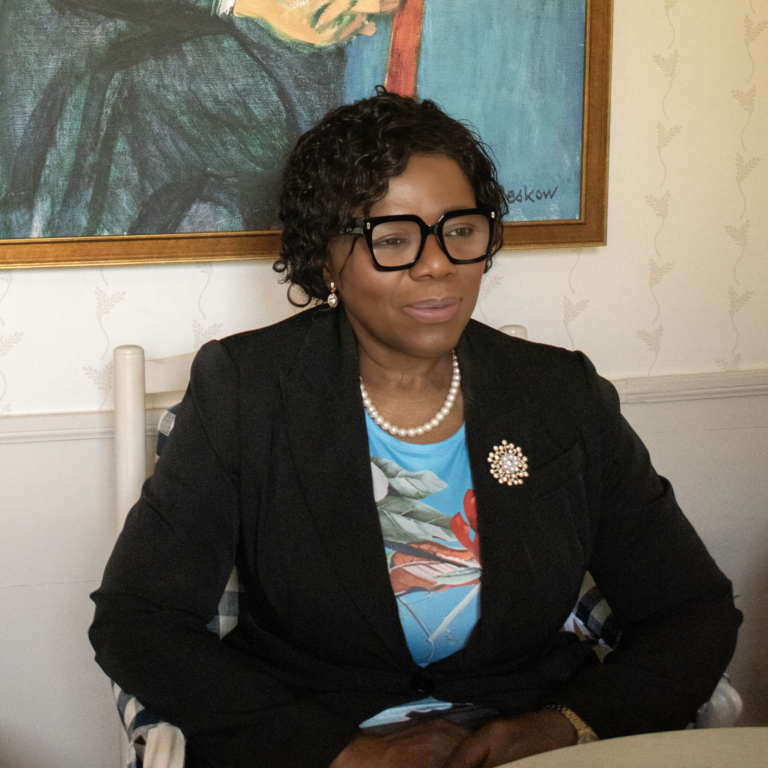
Professor Thuli Madonsela, former Public Protector, constitutional drafter and one of Africa’s most prominent voices on social justice, recently joined the Dag Hammarskjöld Foundation’s Board of Trustees. In this conversation, she reflects on the accountability gaps in today’s multilateral system, why the UN must rediscover its voice, and what it takes to lead with integrity when global governance is under strain.
When Professor Thuli Madonsela accepted the invitation to join the Dag Hammarskjöld Foundation’s Board of Trustees, she was drawn to its commitment to strengthening multilateral cooperation and supporting the United Nations. “The key thing for me was service for shared humanity,” she says, “and helping the UN do better.” For Madonsela, this commitment has always been grounded in collective action. “Working through multilateralism, we do much better,” she says, invoking an Ethiopian proverb: “When spider webs unite, they can tie up a lion.”
Whispering truth to power
Madonsela served as Public Protector of South Africa from 2009 to 2016. Those years shaped a deep understanding of accountability. “There’s more to accountability than the adversarial court system,” she says. “A lot of it is whispering truth to power.” The Public Protector model – borrowed from the Swedish Ombudsman – was adapted to include what she calls an “ubuntu” dimension, rooted in the ancient African philosophy that understands individual wellbeing as inseparable from the collective good. The approach, she says, is more restorative and more oriented towards storytelling and listening. “It’s not enough to enforce rules – to say you must do this, or you must stop doing that – without explaining the why,” she says. Understanding, she argues, is what enables people to do the right thing because it is right, not because authority demands it.
“The UN needs to find its voice again”
A central challenge in today’s multilateral system, as Madonsela sees it, is the uneven application of accountability – a dynamic where the consequences of breaking shared norms are not felt equally by all. She speaks from experience. Having spent years inside South Africa’s post-apartheid institutions rebuilding the mechanisms that hold power to account, she understands both how fragile those structures can be and how much depends on their integrity. When norms are applied unevenly, she argues, the damage extends beyond any single injustice – it weakens the authority of the rules themselves. “We need to be careful about leaning – perhaps unintentionally – towards might is right.”
For Madonsela, the UN’s founding purpose remains as relevant as ever. The history of South Africa is, in part, a history of what international solidarity and collective resolve can achieve. The Security Council’s condemnation of Sharpeville, and the sanctions imposed after 1976, demonstrated that the system can act with moral clarity when the will is there. “The UN is not a toothless dog,” she says. “It just needs to find its voice again.”
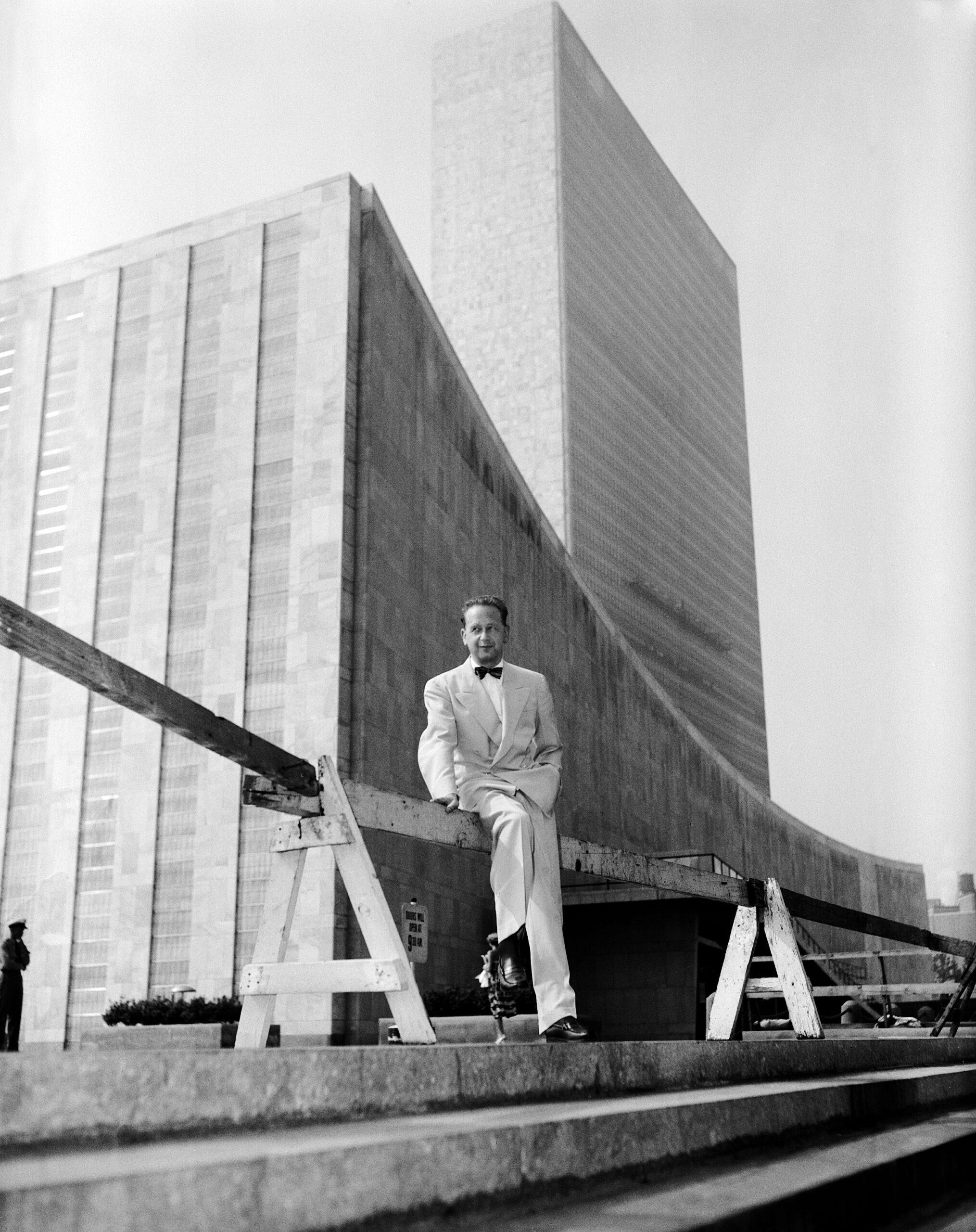
That, she believes, requires both structural renewal and a willingness to use existing tools more fully. “We have to ensure there is equity, inclusion, and arrangements that reinforce rather than undermine accountability – but we can also use what we have in the meantime to do better.” Above all, it requires leadership equal to the moment. “We need leaders like Dag Hammarskjöld who can recognise that the guardrails are no longer holding – perhaps because the world has changed – and ask: how do we reinforce them?”
After the rain
Looking ahead, Madonsela is thoughtful about what she wants to contribute during her time on the board. “My hope is that I will contribute to the areas of ethical and transformative leadership,” she says. Central to that is what she calls social impact-conscious leadership – the idea that whatever you do, you think about how it’s going to impact different people. “Maybe a hundred different groupings of people,” she says.
Equally important is where ideas come from. “Hopefully I can contribute to an approach to peace that views all continents as co-creators of a better world. If we source ideas everywhere, we will do better.”
Ultimately, she returns to a broader sense of possibility. After the rain, there is a rainbow – but it does not appear by itself. “It takes humans to start reimagining the future and the pathways to it. That is what will bring about that rainbow.”