A familiar diagnosis, a missing follow-through
The discussion started from a shared observation: the Funding Compact is not short of diagnosis. There is broad agreement on what good-quality UN funding looks like, namely predictable, flexible and pooled resources that support collective results. What is missing are the political and institutional conditions that make it the norm.
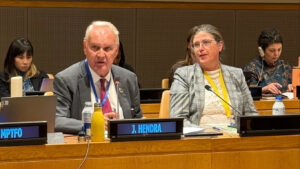
John Hendra, a Senior Advisor to the Dag Hammarskjöld Foundation, put it plainly: “If the funding rewards fragmentation, it will be fragmented. If it rewards coherence, it has a chance to act coherently.”
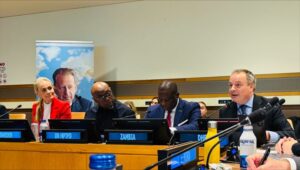
The co-hosts, H.E. Ambassador Charlotte Kugelberg, Permanent Representative of Sweden to the UN, and H.E. Ambassador Chola Milambo, Permanent Representative of Zambia to the UN, took up the same theme: the question is not only how much funding is provided, but whether it is of high quality. Speakers also highlighted a gap between global commitments and practice on the ground. Principles agreed in New York are too often not followed through at country level.
Three messages to the room
The closing remarks directed a message to each group in the room.
To Member States: more quality funding means more accountability, oversight, national ownership and effectiveness. Member States were urged to use their voice in their home countries, towards the UN and its representatives.
To donors: the principles of UN funding discussed at the event, and confirmed in the Funding Compact, must be matched by consistent practice in Embassies at country level.
To UN entities: it is also their responsibility to promote core funding, improve results reporting for softly earmarked funds, and engage more fully for a more collective UN response at country level.
Looking to 2027
As 2027 approaches, the central question is whether Member States and the UN development system are prepared to change the incentives and accountability arrangements needed to keep the promise to the most vulnerable people the UN ultimately serves.
Watch the recording of the presentation here: Financing the UN Development System: Keeping the promise – UN Web Tv
Read the full report: Keeping the Promise