
Dag Hammarskjöld had served as UN Secretary-General for more than eight years, leading the organisation during a turbulent time marked by polarisation among world powers and armed conflicts causing fear and destruction in several regions across the globe. It was a time not unlike the present.
As we pause to commemorate Dag Hammarskjöld’s life and achievements, we do so at a moment of renewed global attention on the role of the UN Secretary-General, given the ongoing process to select a new candidate to take on that position at the start of the new year.
Whoever is appointed will face the difficult task of advancing ongoing efforts to streamline the organisation in response to intense financial and political pressures.
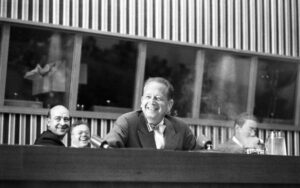
Dag Hammarskjöld led a much younger organisation than the one of today. Even so, he recognised the need for the UN to continuously adapt and change to meet the most urgent needs it was created to address. He advanced many reforms during his time in office and is credited, among other things, with initiating the first peacekeeping mission and introducing preventive diplomacy.
Yet, in all his efforts to advance change, he was steadfast in his conviction that the UN Charter is a constant, serving as a compass to guide and provide direction for the organisation and its international civil servants.
The UN Charter sets out the values and principles that must consistently underpin the organisation’s work. It provides orientation on peace, human dignity, justice and international law. It articulates the commitment to solve international problems through international cooperation. It sets out the equal rights of nations, large and small.
So today, as we reflect on Dag Hammarskjöld’s life and legacy and its relevance for our time, it seems appropriate to recall his unwavering commitment to the foundational treaty of the UN and its purpose of reaffirming fundamental human rights; maintaining international peace and security; and promoting the economic and social advancement of all peoples. Perhaps we can find inspiration in his belief that it is possible to stand firm in the Charter’s principles while proactively pursuing innovation and change, to ensure the organisation remains the indispensable instrument for the world community that he understood it to be.
As he put it: “There are no absolute answers to the agonies and searchings of our time. But all men and women of good will can influence the course of history in the direction of the ideals expressed in the Charter.”
By Sigrid Gruener, Deputy Executive Director of the Dag Hammarskjöld Foundation.