

Call For Strengthening Protections For National Security Whistleblowers
This month, as part of the “Stand Up for Truth” tour, a group prominent whistleblowers – Daniel Ellsberg, Thomas Drake, Coleen Rowley and Jesselyn Raddack shared their stories at a roundtable in the Swedish Parliament calling for the strengthening protection of whistleblowers. The Dag Hammarskjöld Foundation co-organized the event with the Right Livelihood Award Foundation who, in 2006, awarded Daniel Ellsberg the Right Livelihood Award.

Uppsala Health Summit: A world without antibiotics
The annual Uppsala Health Summit was organised on 2-3 June and the theme for this year was antibiotic resistance. The 180 invited experts discussed concrete action and next steps on the many interlinked issues concerning antibiotic resistance. The Dag Hammarskjöld Foundation co-organised the workshop “Access, not Excess – Rational Use of Antibiotics”.

EAT Stockholm Food Forum: “2015 is the year we can create positive change”
On 1-2 June, the annual conference EAT Stockholm Food Forum welcomed a broad range of global stakeholders to discuss solutions to sustainable food consumption and the development of a food road map to 2050 when the world’s population is believed to amount to 9 billion. Dag Hammarskjöld Foundation participated in the conference and co-organised a workshop on “The Protein Puzzle: The Future of Protein Consumption”. These activities were carried out within the Foundation’s programme Global Disorders, where antibiotics resistance and global governance are particularly relevant to the discussion.

In the World We Want, What UN Do We Want?
On 29-30 May, the Dag Hammarskjöld Foundation, together with the UN Department of Economic and Social Affairs (ECOSOC), organised a high-level meeting outside New York on the subject of UN reform. The meeting marked the culmination of the first phase of an intensive dialogue process among the UN member states and the UN development system on the future of the UN development system in light of the imminent post-2015 development agenda.

What Counts? Harnessing the Data Revolution for Sustainable Development
Today, data is generated much more widely and frequently than before, thanks to greater awareness of data use, the evolution of software, and better technical and analytical tools. This data revolution is paving the way for profound transformations in how we approach development, analyse the challenges and better monitor the sustainable development goals.

The 2015 Kofi Annan – Dag Hammarskjöld Lecture
Dr Mohammed Ibn Chambas delivered the lecture on the theme “The Continuing Challenges of Peace and Security in Africa: A West African Perspective”.

Launch of report: Financing the UN Development System
“Financing the UN Development System: Getting it Right for a Post-2015 World”, jointly prepared by the Dag Hammarskjöld Foundation and the UN Multi-Partner Trust Fund Office, underlines that the new development agenda will require not only additional resources but also the use of a wider range of financing instruments and mechanisms to meet the challenges of an ambitious set of universal sustainable development goals (SDGs).

Civil Society input to peacebuilding and UN Peace Operations
During March 11-13 the DHF co-hosted a series of events in New York that facilitated civil society representatives from Africa, Asia and Latin America to provide input to the UN Peace Operations Review and the UN Peacebuilding Architecture Review. These events were organised by members of the NGO Peacebuilding Group in New York together with the Norwegian Institute of International Affairs (NUPI).
Can legal mechanisms curb antimicrobial resistance?
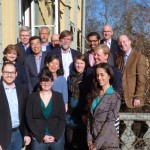
Dag Hammarskjöld Foundation hosted a two-day writers’ workshop to facilitate action towards an international legal mechanism on antimicrobial resistance. The meeting also served as a peer-review process for authors contributing to a journal series that will be published shortly.

Henrik Hammargren appointed new Executive Director of the Dag Hammarskjöld Foundation
The Dag Hammarskjöld Foundation is pleased to announce the appointment of Henrik Hammargren as its new Executive Director. Hammargren comes to the Foundation with extensive experience from international development cooperation, having worked as a director at the Swedish International Development Cooperation Agency (Sida) and as an advisor at the Organisation for Economic Development and Cooperation (OECD). Hammargren replaces Annika Söder who was appointed State Secretary for Political Affairs at the Ministry of Foreign Affairs in Sweden in October.